English
  français
  Deutsch
  Español
  italiano
  português
  tiếng việt
  Türkçe
  slovenský
  slovenčina
  беларускі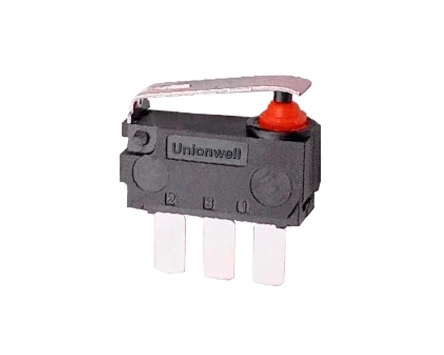
Global_Safety_Approvals_Basic_Micro_Switch_G5.webp "Global Safety Approvals Basic Micro Switch G5")





RM1311, Renfeng Building, No. 490, Tianhe Road, Tianhe District, Guangzhou, Guangdong, China, 510630.
Factory Address:No. 9 Park Avenue, Longmen County, Huizhou City, Guangdong Province, China

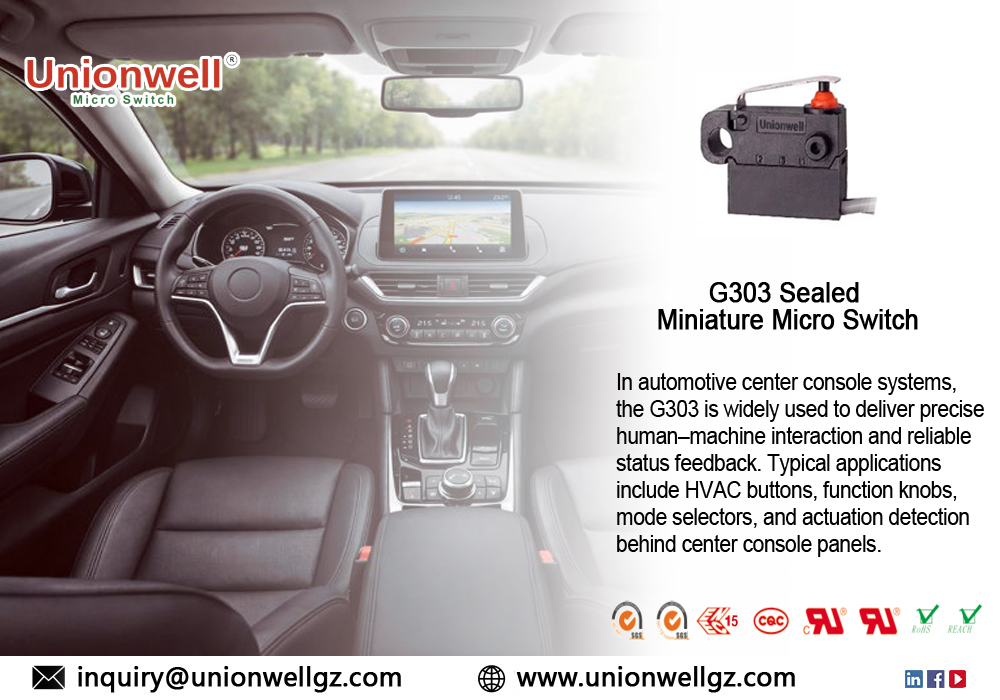
Modern automotive center consoles have evolved far beyond simple mechanical panels. They now integrate physical buttons, rotary controls, touch interfaces, and electronic feedback into a highly compact human–machine interface (HMI). While large displays and capacitive touchscreens attract most of the attention, physical control elements remain essential for safety, usability, and redundancy.
Behind these physical interfaces, micro switches continue to play a critical role. Although small and often hidden from view, they serve as fundamental signal-generating components that translate mechanical actions into reliable electrical inputs for vehicle control systems.
From an engineering standpoint, the persistence of micro switches in automotive center consoles is driven by reliability and clarity of operation.
Typical functions include:
Discrete signal generation
Micro switches provide clear ON/OFF signals that are easily interpreted by body control modules (BCM) and infotainment systems.
Positive actuation feedback
The snap-action mechanism ensures a defined switching point, helping drivers confirm operations without visual confirmation—an important safety advantage.
Logical confirmation and redundancy
In many console designs, micro switches are not the primary control element but serve as confirmation or position-detection components to prevent false inputs.
These characteristics make micro switches especially valuable in applications where accuracy and repeatability matter more than visual sophistication.
Although center consoles are located inside the passenger cabin, their operating environment is far from benign. Engineers must account for several long-term stress factors:
Thermal cycling
Vehicles experience wide temperature variations due to climate, solar load, and HVAC operation. Repeated thermal expansion and contraction can affect mechanical tolerances and electrical stability.
Vibration and mechanical stress
Continuous vibration from road conditions and powertrain operation can lead to contact bounce or fatigue if the switch design is not sufficiently robust.
Moisture and particulate exposure
Condensation from air-conditioning systems, interior cleaning, and airborne dust can gradually compromise unprotected components.
For these reasons, center console switches increasingly require enhanced sealing and mechanical durability.
Micro switches are widely used in various center console mechanisms, often embedded within more complex assemblies:
Rotary control position detection
Used to detect defined positions or detents within rotary knobs and selectors.
Physical button actuation
Serving as the core electrical interface beneath decorative keycaps or trim components.
Mode selection and confirmation mechanisms
Providing confirmation signals in electronic gear selectors or multifunction control modules.
Across these applications, the key requirements are compact size, consistent actuation, and long-term reliability under frequent use.
Sealed micro switches have become increasingly relevant in automotive interior applications due to their improved resistance to environmental influences.
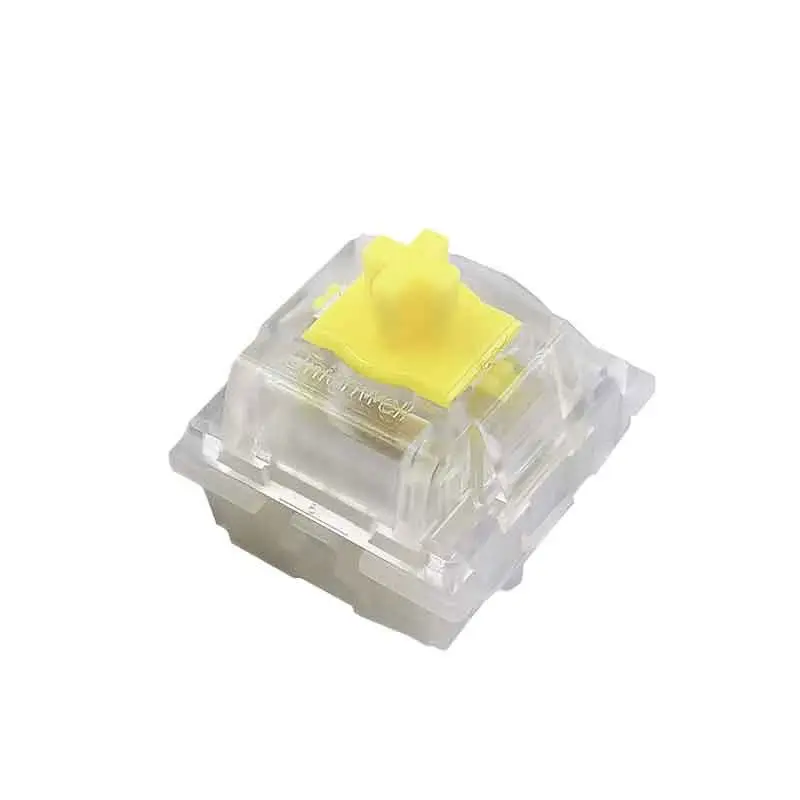
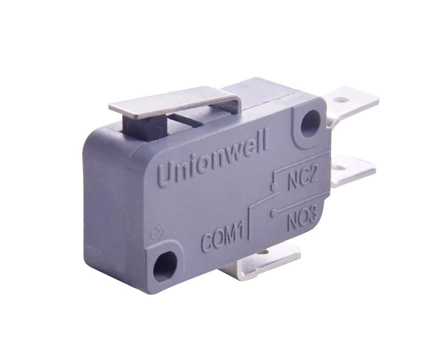
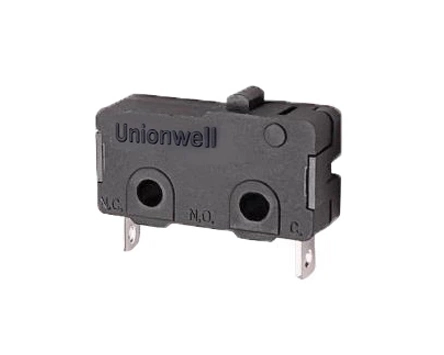
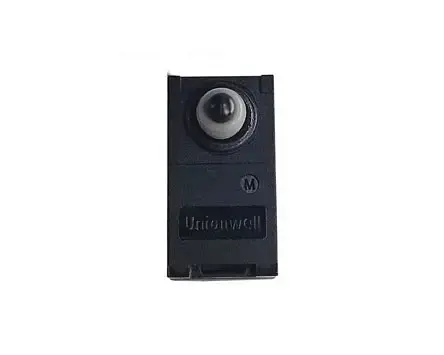
The Unionwell G303 sealed subminiature micro switch is a representative example of this design approach. Without focusing on product promotion, it illustrates several characteristics that align well with center console requirements:
IP67 sealing performance
Helps protect against dust ingress and incidental moisture, supporting stable operation over the vehicle’s service life.
Compact, space-efficient construction
Suitable for densely packaged console assemblies where space is limited.
Stable mechanical and electrical behavior
Designed to maintain consistent actuation under vibration and repeated use.
In practice, such features allow engineers to focus on system-level integration without excessive concern for premature switch degradation.
When selecting micro switches for automotive center console systems, engineers typically evaluate components based on multiple criteria rather than a single specification:
Actuation consistency and repeatability
Directly influences user perception and system accuracy.
Mechanical and electrical durability
Console switches may be actuated tens of thousands of times over a vehicle’s lifetime.
Environmental robustness
Resistance to temperature variation, vibration, and moisture is critical for long-term reliability.
Mounting flexibility and actuator options
Compatibility with diverse mechanical designs simplifies integration and reduces development constraints.
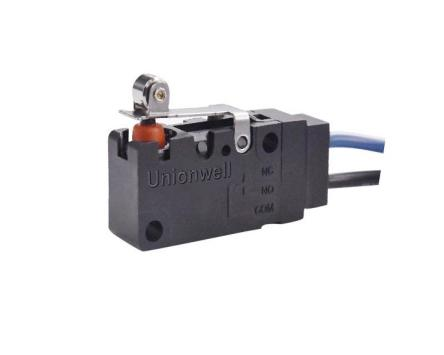
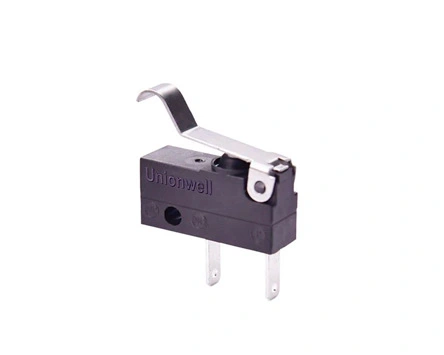
Sealed micro switches with multiple actuator and terminal options, such as the G303 family, often provide greater design flexibility during the early development stages.
Despite their modest size, micro switches play a disproportionately important role in the performance of automotive center consoles. They do not define the vehicle’s digital intelligence, but they strongly influence how reliably and intuitively drivers interact with vehicle systems on a daily basis.
As automotive interiors continue to balance digital interfaces with tactile controls, micro switches will remain a foundational technology—quietly supporting system stability, safety, and user confidence throughout the vehicle’s lifecycle.