 English
  français
  Deutsch
  Español
  italiano
  português
  tiếng việt
  Türkçe
  slovenský
  slovenčina
  беларускі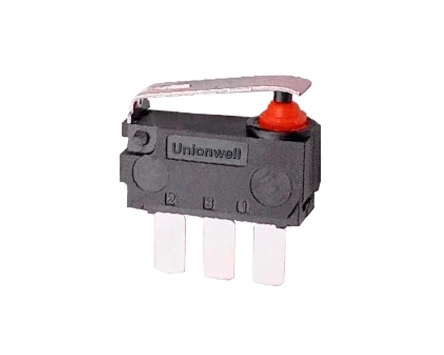
Global_Safety_Approvals_Basic_Micro_Switch_G5.webp "Global Safety Approvals Basic Micro Switch G5")


RM1311, Renfeng Building, No. 490, Tianhe Road, Tianhe District, Guangzhou, Guangdong, China, 510630.
Factory Address:No. 9 Park Avenue, Longmen County, Huizhou City, Guangdong Province, China

As the automotive industry continues to evolve toward higher levels of safety and smart control, even the smallest components are playing a critical role in vehicle reliability. Among them, micro switches have become essential elements in automotive safety systems. Though compact in size, these switches are widely used in door locks, brake systems, transmission mechanisms, and particularly in hood latch systems, where they help ensure both driver safety and vehicle security.
This article takes a closer look at how micro switches work within car hood locks, why they are indispensable for modern vehicles, and how Unionwell G303 provides an ideal solution with its robust, automotive-grade design.
The hood serves as a protective barrier for critical vehicle components such as the engine, electronic control units, and wiring harnesses. If the hood isn’t securely locked during driving, it may unexpectedly lift, blocking the driver’s view and potentially causing serious accidents.
Beyond mechanical safety, the hood latch system also plays a role in:
Security – A properly monitored hood prevents unauthorized access to engine components and supports alarm systems.
Interlock Functions – Many vehicles won’t start or will display warning messages if the hood is not fully closed.
System Integration – Hood status is often integrated into broader vehicle control systems to improve safety and functionality.
To achieve this, manufacturers rely on a reliable sensing element to detect the precise status of the hood latch — and that's where a micro switch comes in.

A micro switch is a snap-action switch designed to trigger at a precise actuation point with minimal force. Installed inside the hood latch mechanism, the switch operates in tandem with the latch movement:
Hood Closed: The latch presses the actuator arm of the micro switch, sending a “locked” signal to the vehicle’s control unit.
Hood Opened: The latch releases, the switch resets, and a “unlocked” signal is sent.
Signal Transmission: The signal is instantly processed by the ECU, triggering alarms, dashboard warnings, or preventing engine start if needed.
This mechanism ensures accurate, real-time detection with extremely fast response, even under continuous vibration and temperature fluctuations.

The engine compartment is one of the harshest environments in a vehicle: wide temperature swings, high humidity, dust, oil, and constant vibration. Any sensor or switch placed here must meet strict automotive standards.
The main requirements of automotive micro switches include:
High protection rating: IP67-level waterproof and dustproof protection is typically required to prevent contaminants from affecting switch performance.
Long operational life: Hood latch switches need to last for hundreds of thousands of cycles, matching the vehicle’s entire lifespan.
Reliable actuation force: Precise and stable triggering minimizes the risk of false signals.
Flexible design: Compatibility with different latch structures and wiring configurations simplifies integration for OEMs.

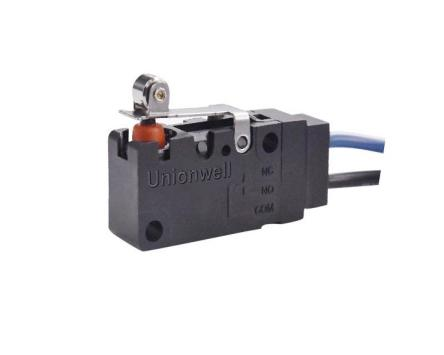
To meet these demanding requirements, Unionwell G303 stands out as a compact, sealed subminiature micro switch purpose-built for automotive environments.
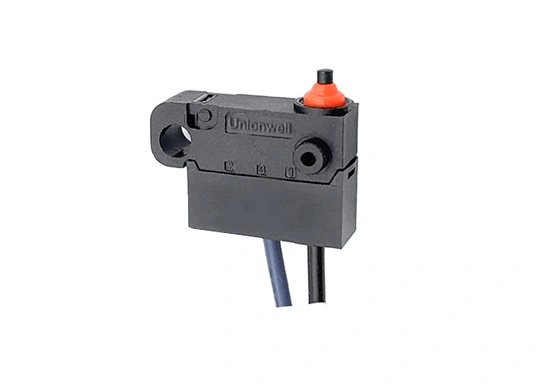
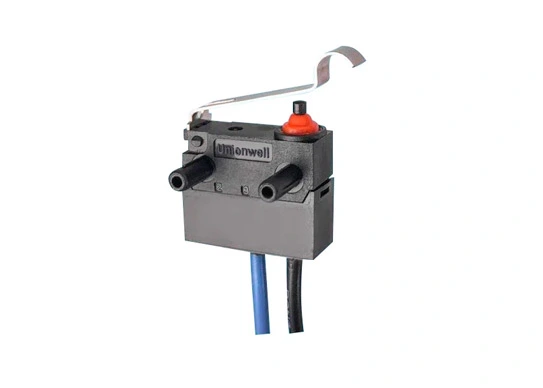
The G303 features a fully sealed design that effectively blocks dust, moisture, and engine bay contaminants. This ensures stable performance in harsh automotive conditions, from freezing winters to hot engine bays.
Electrical life: ≥100,000 cycles
Mechanical life: ≥500,000 cycles
This durability guarantees reliable hood status detection throughout the vehicle’s service life, minimizing maintenance or replacement needs.
The G303 meets major international safety standards including UL, cUL, and ENEC. These certifications help automotive manufacturers accelerate global market entry while ensuring safety compliance.
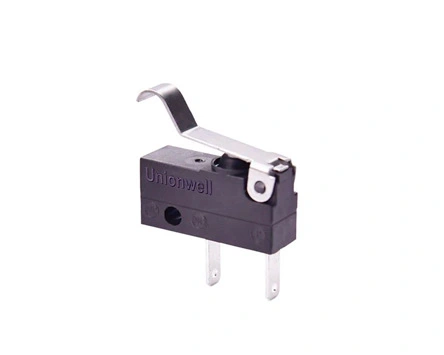
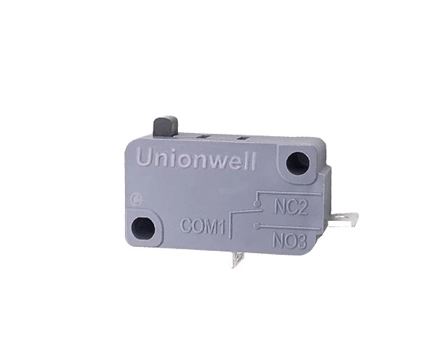
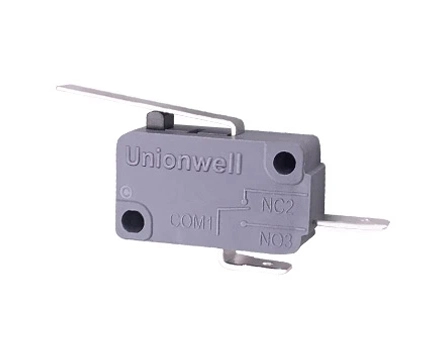
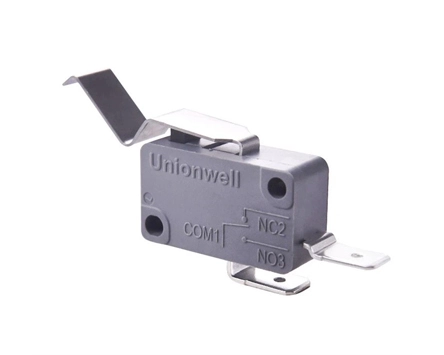
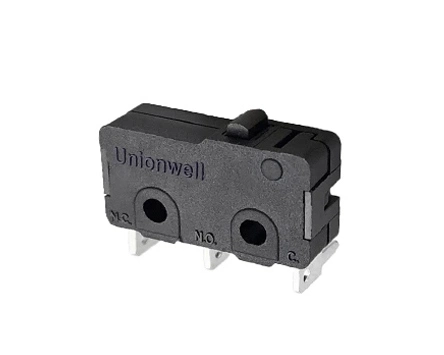
The G303 offers multiple actuator types, terminal options, and form factors, allowing OEMs to integrate the switch into various latch designs without extensive customization.
While optimized for automotive hood locks, the G303 series is also used in household appliances and industrial equipment, further proving its reliability and engineering maturity.
With the rise of electric and smart vehicles, hood latch systems are evolving beyond their traditional mechanical roles. Many EVs now feature frunks (front trunks), which require even more precise and reliable sensing.
In the near future, sealed micro switches will continue to improve in several key areas:
Wider environmental tolerance for extreme temperatures and demanding conditions.
Higher signal accuracy, reducing noise and latency in smart control systems.
Deeper integration with electronic control units for seamless vehicle operation.
Miniaturization and lightweight design, supporting vehicle efficiency goals.
These trends will further expand the role of micro switches from simple components to integral parts of intelligent vehicle architectures.
Micro switches may be small, but their impact on vehicle safety and performance is significant. In hood latch systems, they ensure that the hood is securely locked and continuously monitored, directly supporting both driver safety and vehicle security.
Unionwell G303 is engineered to meet the strict demands of automotive environments. With its IP67 protection, long service life, global certifications, and flexible installation options, the G303 offers a robust and cost-effective solution for hood lock detection and beyond.
As the automotive industry moves toward greater intelligence and electrification, reliable components like the G303 will continue to provide the foundation for safer, smarter vehicles.
