 English
  français
  Deutsch
  Español
  italiano
  português
  tiếng việt
  Türkçe
  slovenský
  slovenčina
  беларускі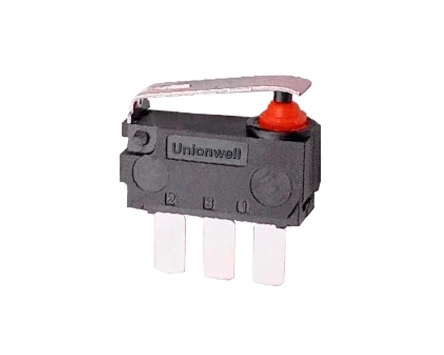
Global_Safety_Approvals_Basic_Micro_Switch_G5.webp "Global Safety Approvals Basic Micro Switch G5")



RM1311, Renfeng Building, No. 490, Tianhe Road, Tianhe District, Guangzhou, Guangdong, China, 510630.
Factory Address:No. 9 Park Avenue, Longmen County, Huizhou City, Guangdong Province, China

In daily operation of commercial ice makers, you may notice that after running for a while, the machine stops automatically, and once some ice is used, it restarts. Behind this seemingly simple automatic process lies a precise detection and control system, with micro switches being one of its key components.
Technically, the operation of an ice maker can be divided into four stages: ice making, storage, detection, and control. The compressor provides cooling power, the evaporator enables heat exchange, while ice storage detection directly affects system efficiency and operational safety.
The micro switch for sale is essentially a precision switch equipped with a snap-action mechanism. Its core technology allows it to convert a slow input signal into a fast, accurate switching action, which is particularly crucial for ice maker applications.
The internal mechanism of a micro switch uses an over-center design. As force is applied to the actuator, the spring system inside stores energy until it reaches a tipping point, at which the spring force is instantly released, driving the contacts to switch rapidly. This ensures that regardless of how slowly force is applied, the contacts operate instantly, avoiding poor contact or arc discharge.
In ice makers, this mechanism is valuable. The change in ice storage level is gradual, with the float rising slowly. However, the snap-action ensures precise and decisive switching control.
The ice maker micro switch often controls the compressor. When the compressor starts, the inrush current can be four to six times the rated current, requiring the switch to withstand this surge reliably. Additionally, as a typical inductive load, switching off the compressor generates reverse EMF, demanding strong arc suppression from the switch.
Typically, micro switches work with a float mechanism inside the ice storage bin. As ice accumulates, the float rises and eventually triggers the micro switch when it reaches a preset level.
While this process seems simple, it requires high technical precision in practice. The switching accuracy directly affects machine efficiency, and consistent repeatability ensures stable ice storage levels without fluctuation.
In traditional designs, micro switches are connected in series with the compressor control circuit. When the ice bin is full, the switch opens, cutting power to the compressor. When ice is used, the switch closes, restarting ice production. This direct control is simple and reliable but demands high-quality switches.
Modern ice makers increasingly use relays or contactors as intermediate control elements. In these cases, micro switches only handle small control currents, protecting the switch and improving overall system reliability.
Ice makers have high humidity inside, often with condensation present. This requires switches with excellent moisture resistance. The temperature also fluctuates from low during ice making to higher during defrost cycles, demanding stable performance across the temperature range.
Commercial ice makers often run continuously, especially in food service environments. Switch failure can cause the machine to stop working properly, directly affecting daily operations. Data shows that high-quality micro switches should have a failure rate below 0.1%.
Although ice level changes are gradual, timely system response remains critical, especially during peak usage when ice is consumed rapidly. The fast response feature of micro switches ensures production keeps up with demand.
When choosing a micro switch, ensure its electrical specifications match application requirements, including rated voltage, current, and contact resistance. For direct compressor control, check inrush current tolerance and inductive load switching capability.
Operating force, travel, and repeat accuracy affect switch performance in detection systems. Excessive force increases mechanical load, while too little may cause unreliable operation. High repeat accuracy ensures consistent ice level detection.
Select switches with suitable protection ratings for the environment, generally IP65 or higher for ice makers. Also consider temperature range and vibration resistance.
As ice maker control systems become smarter, micro switches are evolving to integrate additional features such as position sensing or temperature monitoring, providing richer data for advanced control strategies.
Advances in materials and manufacturing are improving switch reliability and lifespan. New contact materials, improved sealing, and optimized spring designs help switches operate stably for longer, even in harsh conditions.
To meet diverse application needs, micro switches are becoming more modular. Standardized terminals and various actuator options allow one switch model to suit different detection mechanisms and installation requirements.
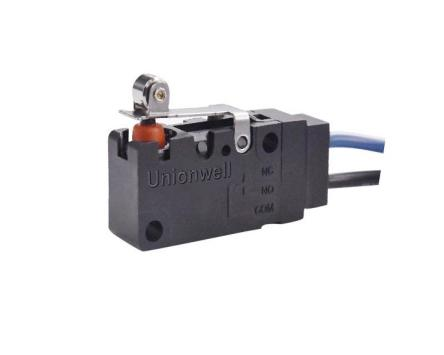
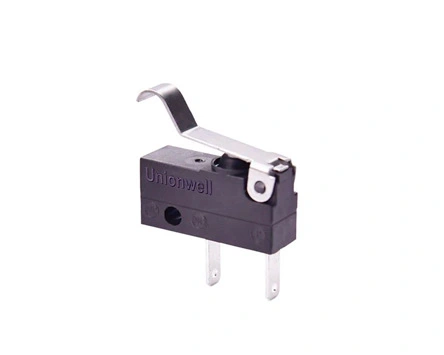
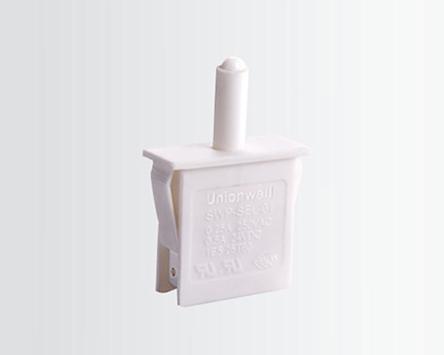
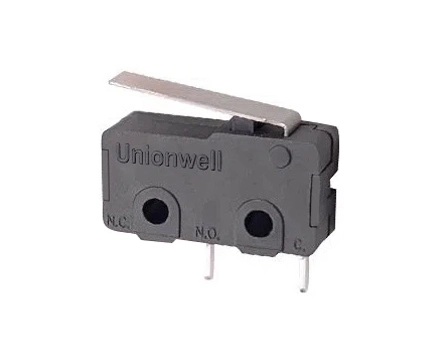
Understanding the specific demands of ice maker applications, Unionwell developed the G5 series micro switches, optimized for commercial equipment.
The G5 series features a compact design with minimal contact gap, combined with fast action, high sensitivity, and short travel, meeting the precision and responsiveness needed for ice full detection.
Its wide operating force range (7gf~600gf), diverse terminal types, and multiple actuator options ensure adaptability to various ice maker designs.
The G5 series offers multiple temperature ratings (25T85, 25T125, 25T150) and PTI ratings of 175V, 250V, and 600V to suit full working conditions from cooling to defrost cycles. It is also certified to global safety standards, ensuring reliable performance in international markets.
With long mechanical life (≥10,000,000 or ≥1,000,000 cycles) and electrical life (≥50,000 or ≥100,000 cycles), the G5 series provides durable performance, significantly reducing maintenance costs for equipment owners.
Beyond ice makers, the G5 series' features make it suitable for other household and commercial appliances.
Washing Machines: For door lock detection and water level control, its precision and reliability ensure safety and performance.
Dishwashers: Its enhanced sealing and corrosion resistance make it ideal for door detection and spray arm position feedback under high temperature and humidity.
Air Conditioners: Suitable for damper control and compressor protection, thanks to its wide temperature range and high current tolerance.
Refrigerators and Freezers: For door switches and defrost control, its low-temperature capability ensures stable operation.
For manufacturers sourcing micro switches in bulk:
Technical Fit: Ensure parameters fully meet application needs without under- or over-specification.
Supply Chain Stability: Assess supplier production capacity, quality control, and delivery reliability, which are often more critical than price in mass production.
Total Cost Analysis: Factor in maintenance and failure costs alongside unit price. Higher quality switches often reduce long-term expenses.
Technical Support: Choose suppliers offering strong technical support during development and mass production, which helps reduce risk and accelerate time to market.
Though micro switches in ice makers seem simple, their selection and design require consideration of multiple technical aspects. From working principles to practical challenges and solutions, each step demands attention to detail.
Unionwell's G5 series combines technological innovation and manufacturing excellence to provide reliable solutions for ice makers and other appliances. Its precision, reliability, and environmental adaptability help manufacturers enhance product quality, reduce maintenance costs, and strengthen market competitiveness.
For manufacturers with large procurement needs, choosing the right micro switch is not just a technical decision but a strategic one that impacts product quality and business growth. Understanding product features and selecting reliable suppliers will lay a solid foundation for long-term success.
