 English
  français
  Deutsch
  Español
  italiano
  português
  tiếng việt
  Türkçe
  slovenský
  slovenčina
  беларускі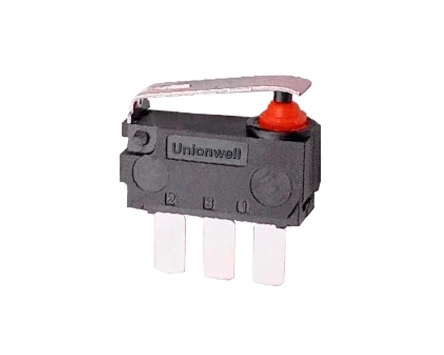
Global_Safety_Approvals_Basic_Micro_Switch_G5.webp "Global Safety Approvals Basic Micro Switch G5")



RM1311, Renfeng Building, No. 490, Tianhe Road, Tianhe District, Guangzhou, Guangdong, China, 510630.
Factory Address:No. 9 Park Avenue, Longmen County, Huizhou City, Guangdong Province, China

Snap action micro switches are precise, reliable, and responsive signal switching devices in modern electrical control systems, serving as a core component for ensuring stable equipment operation. However, many people still cannot distinguish between different types of micro switches.
This article will provide a detailed introduction to "What is a Snap-Action Micro Switch?", covering its definition, working principle, internal structure, classification, performance advantages, and application scenarios.
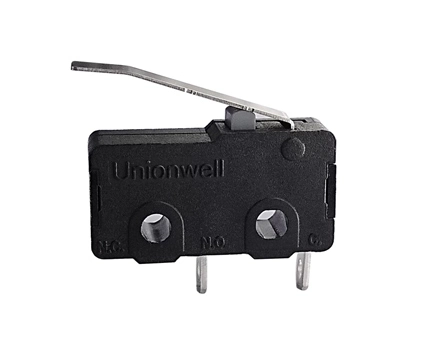
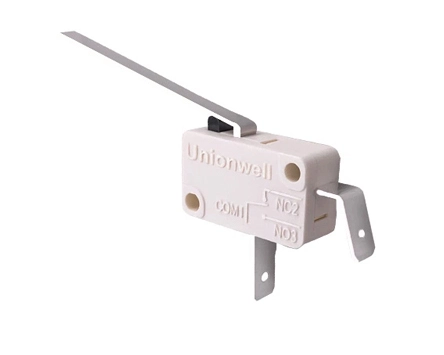
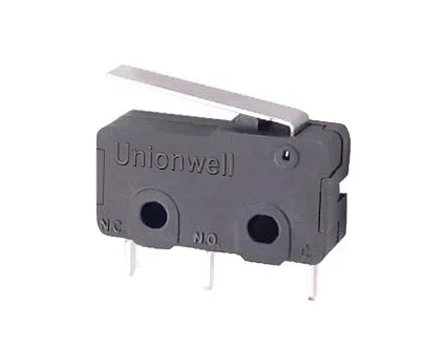
Technically speaking, a snap action micro switch is a precision micro switch that uses a central spring mechanism to achieve instantaneous contact switching. Its core feature is that when an externally applied mechanical force reaches a set threshold, the internal spring completes a "jump" switch from one stable state to another in a very short time, thus achieving rapid circuit switching.
Compared to ordinary mechanical switches, snap micro switches have a shorter operating stroke, higher repeatability, and more stable contact pressure control. They typically have normally open (NO), normally closed (NC), and common terminal (COM) structures, and can perform single-pole double-throw (SPDT) functionality, making them extremely common signal detection and control components in industrial control.
These switches are called snap action micro switches because of their fast response speed during triggering. Unlike slowly compressing switches, snap action switches do not gradually conduct with pressure during triggering; instead, they switch instantaneously after reaching the set operating force. Therefore, the name "snap action micro switch" essentially originates from the physical characteristics of its mechanical structure.
1. Clear Action, Less Prone to Accidental Triggering: The snap action micro switch has clearly defined press and release positions. After triggering, it will not repeatedly bounce due to slight vibrations, ensuring stable and reliable operation.
2. Stable Contact, Reliable Conductivity: After switching, the contacts fit tightly, ensuring stable current transmission and reducing the likelihood of poor contact or signal instability.
3. Long Lifespan, Good Consistency: The snap action micro switch maintains a stable trigger position even during long-term, repeated use, making it suitable for high-frequency operation and continuous working environments.
4. Rapid Response, Clean Signal: The contact switching speed is fast; even with slow pressing, it can instantly complete the switching process, resulting in a clear and unambiguous output signal.
5. Compact Structure, Strong Adaptability: The snap action switch is small in size, easy to install, and can be used with different actuator types, making it suitable for various equipment structural designs.
To understand how a snap action micro switch works, we need to start with its mechanical structure. When an external actuator is subjected to mechanical force, the force is transmitted to the internal spring mechanism through a transmission structure. As the force gradually increases, the spring undergoes elastic deformation. When the deformation reaches a critical point, the spring rapidly flips through an over-center structure, pushing the contacts from normally closed to normally open or vice versa.
The key to this entire process lies in the "over-center" design. This structure ensures that even with slow operating speeds, the internal contacts can achieve rapid and precise on/off switching.
The snap action micro switch typically uses an arc-shaped spring made of stainless steel or a high-elasticity alloy. This spring is pre-stressed during design, giving it two stable positions.
When an external force pushes the spring past the center point, it rapidly flips to the other side. This instantaneous switching process is usually completed within milliseconds, significantly reducing the time the contacts spend in a half-contact state.
The over-center mechanism is the core of the snap action switch. It utilizes the principle of elastic energy storage and release, allowing the system to exist in two stable states. When the spring passes the geometric center point, the stored elastic potential energy is rapidly released, completing the switching.
Due to the fast contact switching speed, the arc duration is shortened, and the degree of contact erosion is reduced. This is the fundamental reason why snap action micro switches have a long electrical life in high-frequency control systems.
Understanding the structure is fundamental to correct selection. A typical snap micro switch usually consists of the following parts:
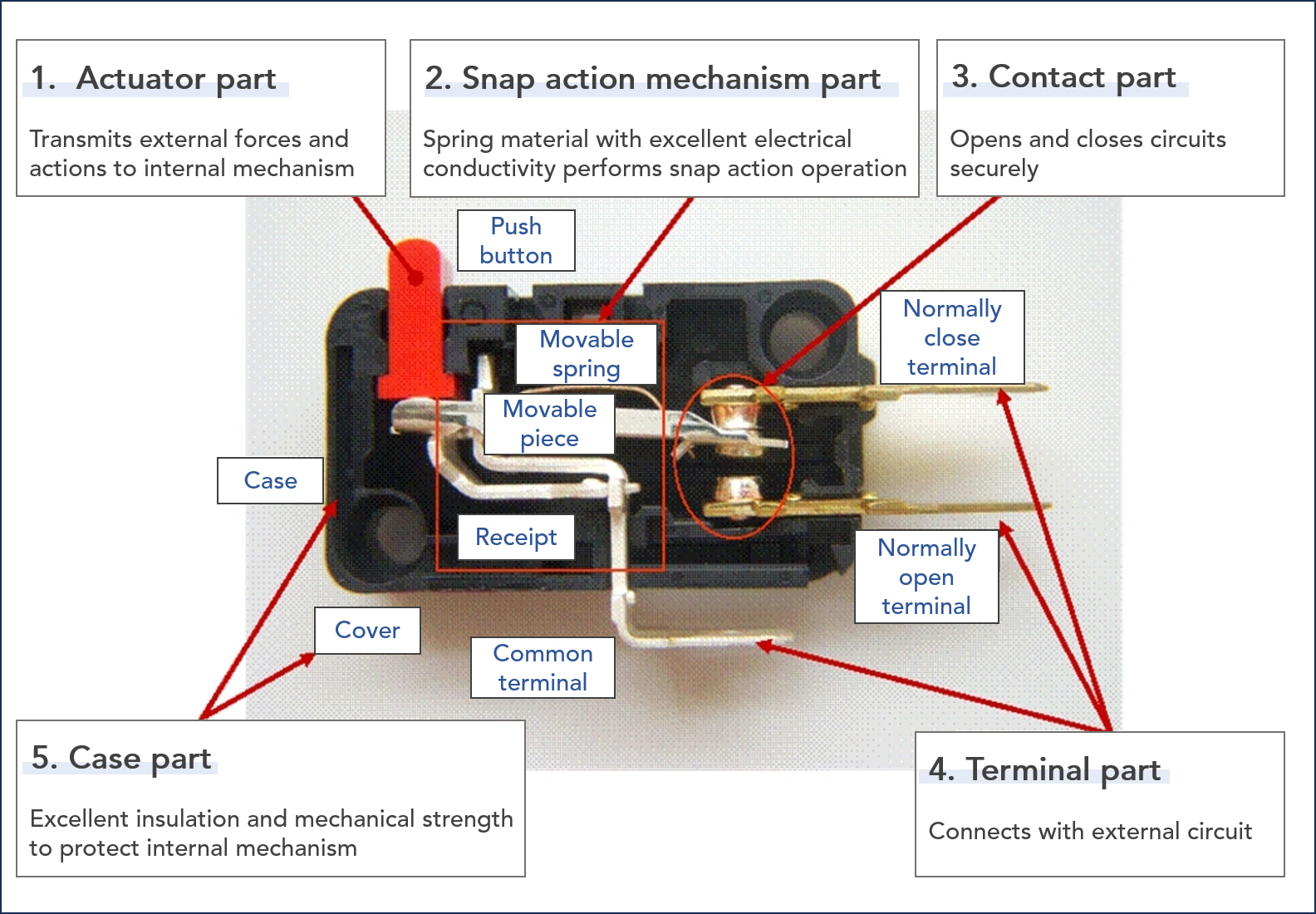
The housing is typically made of high-strength engineering plastics or thermosetting resins, providing good insulation and heat resistance. For industrial or outdoor environments, a sealed snap action micro switch can be designed to prevent dust and water damage, improving reliability.
Actuators come in various forms, including push-button, lever, or roller types. The length and shape of the actuator directly affect the operating force and trigger stroke; selection must consider installation space and operational requirements.
The spring mechanism is the core power unit of the switch, determining the speed and accuracy of contact switching. The spring material, thickness, and heat treatment process directly affect the switch's lifespan and the consistency of repeated triggering.
Contacts are typically made of silver alloy or silver-nickel materials to ensure good conductivity and arc resistance. Contact design must consider rated current, load type, and lifespan requirements to ensure stable and reliable signal.
Common terminal types include solder terminals, quick-connect terminals, and PCB pins. Different terminal types are compatible with different mounting methods, facilitating quick wiring and replacement in various devices.
The SPDT snap action micro switch refers to a single-pole double-throw structure, consisting of a common terminal (COM), a normally open terminal (NO), and a normally closed terminal (NC). In the untriggered state, COM and NC are connected; after triggering, COM and NO are connected.
This structure is widely used in safety detection and position control scenarios. For example, in limit switch detection of industrial equipment, when the equipment reaches the designated position, the switch is triggered, and the system receives a clear electrical signal feedback.
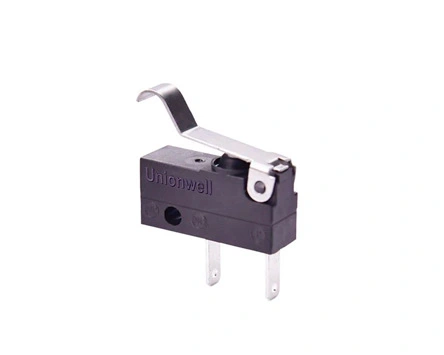
Lever-type actuators are suitable for scenarios requiring lateral or long-distance triggering. The lever structure converts a small operating force into contact action force, suitable for mechanical linkages or cam mechanism control.
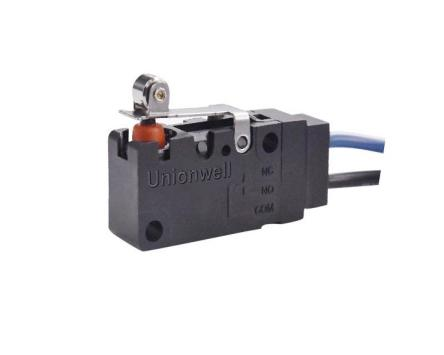
Roller lever types have a roller at the end of the lever, effectively reducing sliding friction. Suitable for continuous sliding triggering or mechanical motion contact scenarios, it offers smooth operation and a longer lifespan.
Plunger types have a compact structure and are triggered by vertical pressing, suitable for equipment with limited space. With uniform pressing pressure and precise contact action, it is commonly used for button detection and limit control.
Long lever type actuators are suitable for scenarios requiring a longer trigger stroke or lighter operating force. By extending the lever length, the operating force can be reduced, facilitating low-force triggering and sensitive detection.
Compared to ordinary slow-action micro switches, the snap action micro switch offers significant advantages:
1. Fast Response: Utilizing an internal instantaneous switching mechanism, the contact switching is rapid, with clear signal edges, ensuring immediate response from the control system.
2. Long Electrical Life: Instant contact switching and short arc duration effectively reduce erosion and extend switch life.
3. Precise Repeatability: The differential travel design prevents false triggering due to slight vibrations or operational deviations, ensuring consistent triggering position each time.
4. Excellent Shock Resistance: The stable bistable spring structure maintains contact state unaffected even under vibration or shock environments, making it particularly suitable for automotive and industrial applications.
5. High Contact Stability: Stable contact pressure ensures reliable conduction and stable signal transmission even under low current or weak signal conditions.
In washing machines, snap action micro switches detect whether the door is closed, ensuring the door is locked before startup; in microwave ovens, they are used for door safety interlocks to prevent heating operation when the door is not properly closed, ensuring safe and reliable use.
Used for door lock status detection, providing real-time feedback on whether the door is closed; in electric seats, they detect and adjust travel limits to prevent motor overshoot; in charging port locking systems, they provide a locking status signal to ensure charging safety.
Used for travel switches and limit control, such as triggering switches when the CNC machine tool table reaches its position to prevent mechanical damage from overtravel; also used for position detection and safe shutdown in automated production lines to ensure stable equipment operation.
The analysis above demonstrates that a snap action micro switch is more than just a simple switch, and its differences from ordinary micro switches are evident. For the home appliance, automotive, and industrial control sectors, selecting a high-quality snap action micro switch is crucial.
If you are looking for a high-quality snap action micro switch, please contact Unionwell for complete snap action micro switch types and technical documentation.