 English
  français
  Deutsch
  Español
  italiano
  português
  tiếng việt
  Türkçe
  slovenský
  slovenčina
  беларускі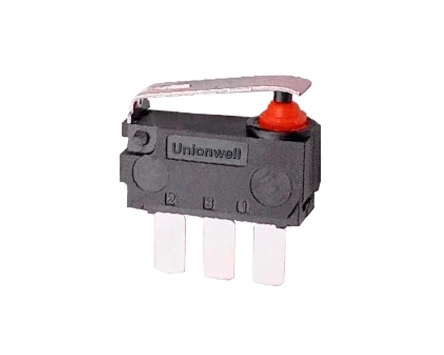
Global_Safety_Approvals_Basic_Micro_Switch_G5.webp "Global Safety Approvals Basic Micro Switch G5")



RM1311, Renfeng Building, No. 490, Tianhe Road, Tianhe District, Guangzhou, Guangdong, China, 510630.
Factory Address:No. 9 Park Avenue, Longmen County, Huizhou City, Guangdong Province, China

As home appliances continue to evolve toward higher levels of intelligence and safety, front-load washing machines have become an essential household device worldwide. Among their key safety components, the door lock system plays a critical role in ensuring reliable operation and user safety. At the heart of these door lock systems is the micro switch, a sensing component whose performance directly impacts the washing machines safety standards and overall lifespan. This article explores the working principles, technical requirements, and key selection considerations for micro switches used in washing machine door locks.
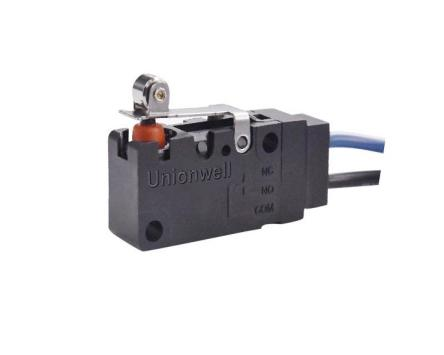
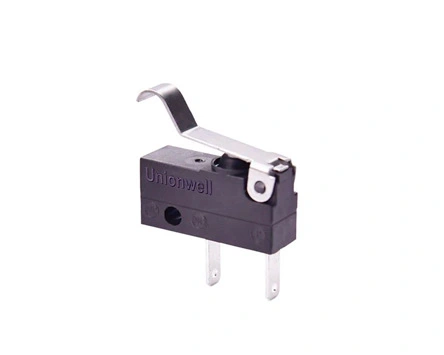
The door lock system in front-load washing machines typically consists of three parts: a mechanical locking mechanism, an electrical control circuit, and a status detection unit. The micro switch for sale is the core of the detection unit. When the user closes the washing machine door, the locking mechanism engages, triggering the micro switch to change its contact status and send a signal to the main control board, confirming the door is securely locked.
Modern washing machines use multiple interlock layers to protect users. First, the system checks whether the door is closed and locked. Then, it confirms the lock status via the micro switch's electrical signal. Finally, a safety delay prevents the door from opening immediately during washing, even if the user attempts to unlock it. This multi-level safety requires micro switches with outstanding reliability and performance stability.
In door lock applications, the micro door switch converts mechanical movement into electrical signals. The control board reads these signals to determine the lock status and decide whether to start, stop, or engage safety protocols for the washing cycle.
Operating Force: The switch must offer an appropriate operating force, typically between 0.5N and 2.0N. Too low can cause false triggering; too high can affect the locking mechanism's smooth operation.
Travel & Pre-Travel: The total travel and pre-travel determine trigger accuracy. Proper design ensures the switch actuates reliably only when the door is fully locked.
Mechanical Life: Given frequent usage, the switch should withstand over 1 million mechanical operations to match the washing machine's 10-15 year lifespan.
Contact Resistance Stability: Low and stable contact resistance (below 50mΩ) ensures reliable signal transmission throughout its lifespan.
Insulation Resistance: With exposure to moisture and detergents, insulation resistance should remain above 100MΩ to ensure safety.
Surge Resistance: The switch must withstand inrush currents and power fluctuations without permanent damage.
Temperature Resistance: Door lock switches must operate reliably at temperatures reaching 60–80°C during washing cycles.
Humidity Resistance: High humidity demands excellent sealing to prevent corrosion or short circuits.
Vibration Resistance: Vibrations from spinning and draining cycles should not affect the switch’s electrical stability.
Contact material directly affects electrical performance and longevity. Silver alloy is common for low-voltage, low-current sensing due to its conductivity and oxidation resistance. Gold alloy, while costlier, offers superior corrosion resistance and stable contact resistance for premium applications.
Engineering plastics like polycarbonate (PC) and polyphenylene oxide (PPO) are widely used for their insulation and mechanical strength.
Depending on wiring needs, terminal types include solder terminals (highest reliability but less serviceable), quick-connect terminals (easy installation and replacement), and screw terminals (for higher currents but larger in size).
Micro switches should comply with international standards such as ISO9001 and ISO14001 and carry certifications from UL, CQC, ENEC, etc., ensuring safety and quality.
Contact Failure: Wear or oxidation increases contact resistance over time. High-quality contact materials and optimized design help mitigate this.
Mechanical Fatigue: Frequent operations may fatigue springs or moving parts. Using high-fatigue-strength materials and optimal spring designs extend life.
Environmental Corrosion: Moisture can cause corrosion. Protective coatings, better sealing, and corrosion-resistant materials improve durability.
Regular inspection of switch operation and electrical performance can identify potential issues early. Designing washing machines for easy switch maintenance and replacement also enhances reliability.
With IoT integration, future micro switches may include self-monitoring capabilities to report their operating status and remaining service life, enabling predictive maintenance.
As space within appliances becomes tighter, switches will trend toward smaller footprints with integrated functions to optimize system designs.
Environmentally friendly materials, reduced hazardous substances, and designs focused on recyclability will be central to the future of micro switch development.
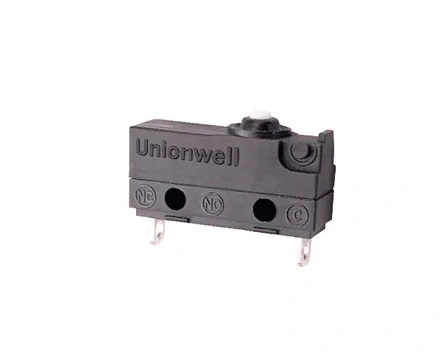
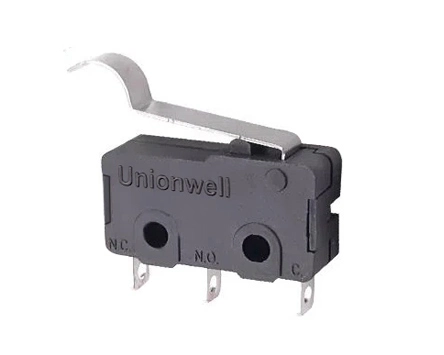
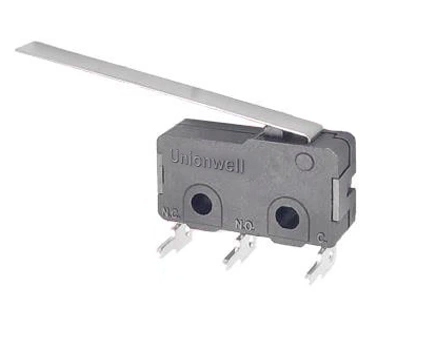
Selecting the right micro switch is critical to ensuring washing machine safety and reliability. The Uniownell G5T16 micro switch is designed precisely for such demanding applications.
Compact and Precise: Features a minimal contact gap for quick actuation, high sensitivity, and small travel distance – ensuring accurate lock status detection.
Outstanding Durability: Mechanical life reaches up to 10 million cycles with electrical life up to 250,000 cycles, exceeding typical industry standards.
Stable Performance: Maintains contact resistance ≤100mΩ and insulation resistance ≥100MΩ for long-term stable signal transmission.
Flexible Operating Force: Offers a wide operating force range from 7gf to 600gf to accommodate various mechanical designs.
Environmental Resilience: Available in multiple temperature grades (25T85, 25T125, 25T150) and operates reliably at speeds of 0.1mm–1m/s with excellent vibration resistance (10-55Hz, 1.5mm double amplitude).
Global Certifications: Complies with international safety standards, offering dielectric strength up to AC1000V between non-connected terminals and AC1500V between live parts and housing, with PTI ratings of 175V, 250V, or 600V.
Design Flexibility: Features a lightweight (~6.2g without actuator) and multiple actuator options, along with diverse terminal configurations to suit various installation needs.
Choosing Uniownell G5T16 means choosing advanced technology, proven reliability, and uncompromised performance to enhance your washing machine products and gain a competitive edge in the global market.
