 English
  français
  Deutsch
  Español
  italiano
  português
  tiếng việt
  Türkçe
  slovenský
  slovenčina
  беларускі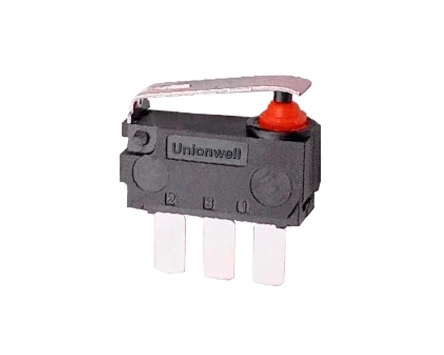
Global_Safety_Approvals_Basic_Micro_Switch_G5.webp "Global Safety Approvals Basic Micro Switch G5")


RM1311, Renfeng Building, No. 490, Tianhe Road, Tianhe District, Guangzhou, Guangdong, China, 510630.
Factory Address:No. 9 Park Avenue, Longmen County, Huizhou City, Guangdong Province, China

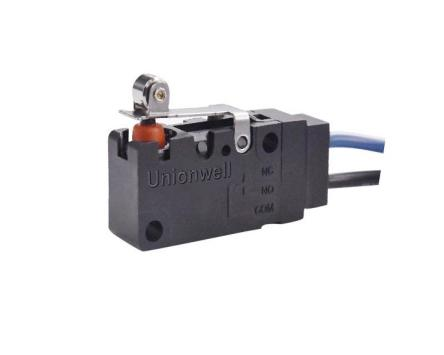
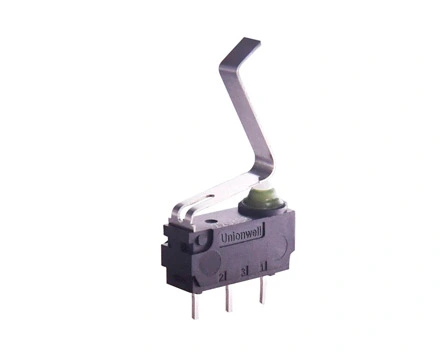
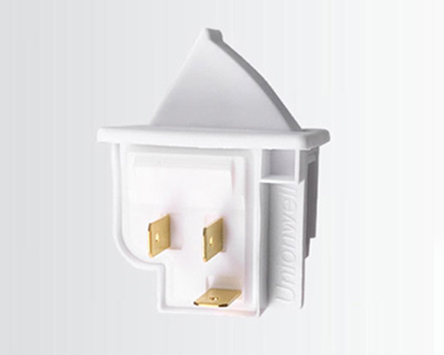
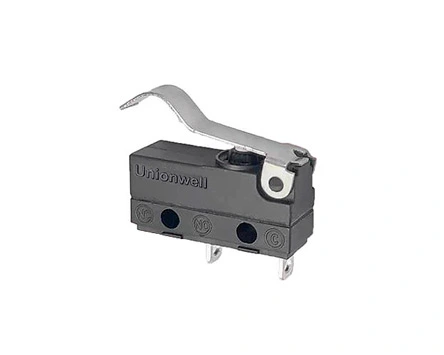
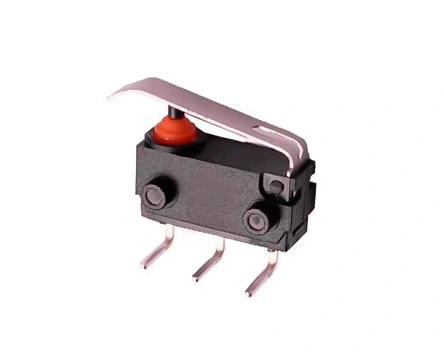
In harsh environments—automotive door locks, tailgates, charging equipment, smart appliances, outdoor tools—the reliability of a micro switch is often defined by one key requirement: waterproof performance. But what exactly determines whether a micro switch is genuinely waterproof? And how do IP ratings translate into real-world protection?
This article explains the fundamentals behind waterproof micro switches, the meaning of IP (Ingress Protection) ratings, and critical engineering considerations that determine long-term durability.
A waterproof micro switch is engineered to prevent moisture, dust, or other contaminants from entering the internal contact mechanism. Since micro switches rely on precise snap-action structures, even tiny particles or condensation could lead to:
Contact failure
Increased resistance
Shortened lifespan
Safety hazards in automotive or industrial systems
True waterproofing requires a holistic sealing strategy, not just an outer rubber cap.
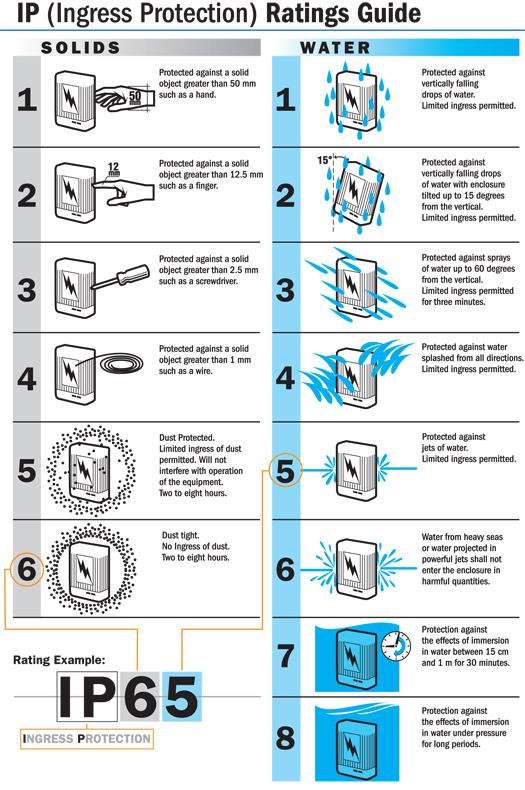
The IP (Ingress Protection) rating is the global standard for defining dust- and water-resistance. It contains two digits:
First digit (0–6): Protection against solid particles
Second digit (0–9K): Protection against water
| IP Level | Meaning | Typical Use Case |
|---|---|---|
| IP40 | Protected against objects >1 mm; not water-resistant | Indoor appliances, dashboards |
| IP67 | Fully dust-tight + water immersion up to 1m | Automotive locks, outdoor controls |
| IP68 | Dust-tight + extended immersion | Harsh industrial environments |
| IP6K9K | High-pressure, high-temperature jet spray | Commercial vehicles, heavy machinery |
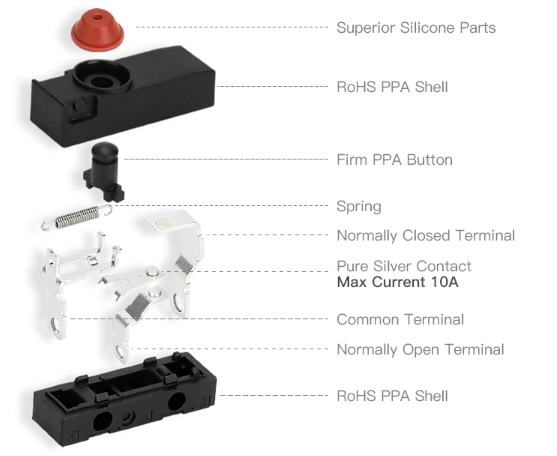
The housing must use high-precision molding with ultra-tight seams. A silicone or fluororubber gasket provides the primary seal.
For metal housings and precision components used in demanding environments, proper metal surface treatment can also improve corrosion resistance and long-term durability.
Terminals are a critical water ingress point. Sealed epoxy resin or molded cavities prevent capillary water flow along lead wires.
A rubber boot, plunger seal, or diaphragm ensures that water cannot enter where the actuator moves.
Even with perfect sealing, the internal structure must withstand humidity and condensation.
High-reliability waterproof micro switches use:
Silver or gold-plated contacts
Corrosion-resistant springs
Anti-arc structures for long life
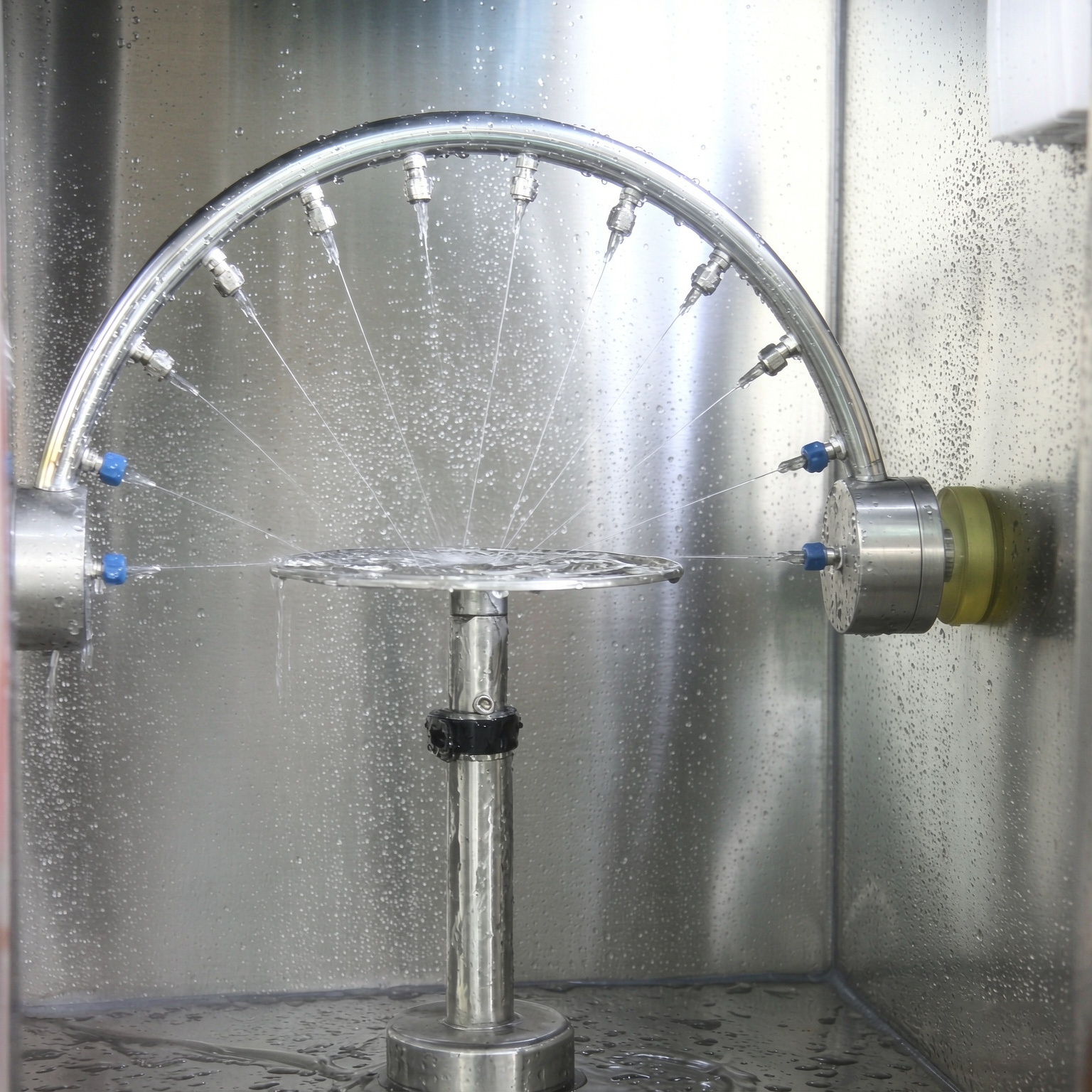
A reliable waterproof micro switch undergoes rigorous IP testing such as:
Immersion test (IP67/68)
High-pressure spray test (IP6K9K)
Thermal cycling
Humidity exposure
Dust chamber testing
These tests simulate real-world conditions found in automotive door locks, outdoor charging equipment, industrial control panels, and consumer appliances, forming part of the standard validation process used by a qualified micro switch manufacturer to ensure consistent waterproof performance in long-term use.
In environments like automotive tailgates, new-energy charging equipment, or outdoor power tools, moisture is inevitable. A waterproof micro switch ensures:
Consistent electrical performance
Long service life
Safety compliance
Reduced maintenance costs
Reliable sensing and control under rain, condensation, or humidity
A micro switch is not truly “waterproof” unless it passes strict IP tests and incorporates professional sealing engineering. Understanding IP ratings—and how they translate into real-world protection—helps engineers select the right component to ensure long-term reliability.
If you need assistance selecting or customizing a waterproof micro switch for automotive, energy, or industrial applications, feel free to ask—I can help you craft specifications or technical documentation.