 English
  français
  Deutsch
  Español
  italiano
  português
  tiếng việt
  Türkçe
  slovenský
  slovenčina
  беларускі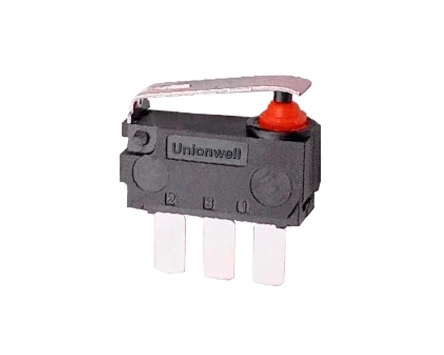
Global_Safety_Approvals_Basic_Micro_Switch_G5.webp "Global Safety Approvals Basic Micro Switch G5")


RM1311, Renfeng Building, No. 490, Tianhe Road, Tianhe District, Guangzhou, Guangdong, China, 510630.
Factory Address:No. 9 Park Avenue, Longmen County, Huizhou City, Guangdong Province, China

A home vacuum sealer must complete several coordinated actions within a compact structure. After the user places a packaging bag into the machine, the lid must close correctly before the vacuum pump begins removing air. The machine then seals the bag and completes the operating cycle.
A home appliance micro switch can be installed between the upper lid and the lower chamber to detect whether the lid has reached the required position. Once the actuator is pressed, the switch changes contact state and provides a signal that allows the vacuum cycle to begin.
For vacuum sealer manufacturers, selecting the correct switch is not simply a matter of finding a component that fits inside the housing. The operating force, actuator type, travel, electrical rating and mounting tolerance must all match the complete lid mechanism.
A typical home vacuum sealer follows a defined working sequence:
The user places the open end of a packaging bag in the vacuum or sealing area.
The lid is closed and secured.
The lid mechanism presses the switch actuator.
The switch confirms that the lid has reached the operating position.
The control system enables the vacuum pump.
Air is removed from the packaging bag.
The heating component seals the bag opening.
The machine completes the cycle and releases the lid.
The exact structure varies among vacuum sealer models. Some machines use a simple mechanical lid, while others incorporate a latch, locking arm or electronically controlled operating sequence.
Regardless of the design, the vacuum pump should not begin operating before the lid and sealing area are correctly positioned. This is why an appliance micro switch can become an important part of the machine’s control logic.
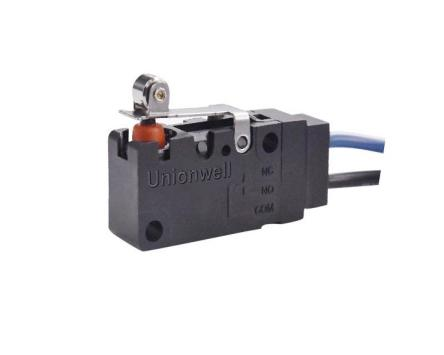
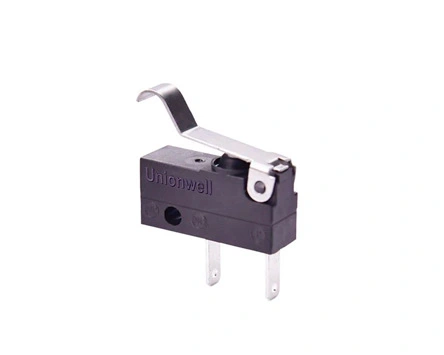
In the application provided by Unionwell, a G6 miniature micro switch is installed between the vacuum sealer lid and the lower chamber.
When the lid is open, the actuator remains in its original position. As the lid closes, a projection or moving component presses the actuator. Once the required operating point is reached, the switch contacts change state.
Depending on the appliance circuit, the resulting signal may be used to:
Confirm that the lid is closed;
Enable the vacuum pump;
Begin the vacuum and sealing sequence;
Prevent operation while the lid is open;
Coordinate the pump, heating and release functions.
The switch may provide a low-power signal to a controller, relay or other control component. Whether it directly carries the pump current depends on the electrical design of the machine.
Vacuum sealer manufacturers should therefore provide the actual voltage, current and circuit type when selecting the switch.
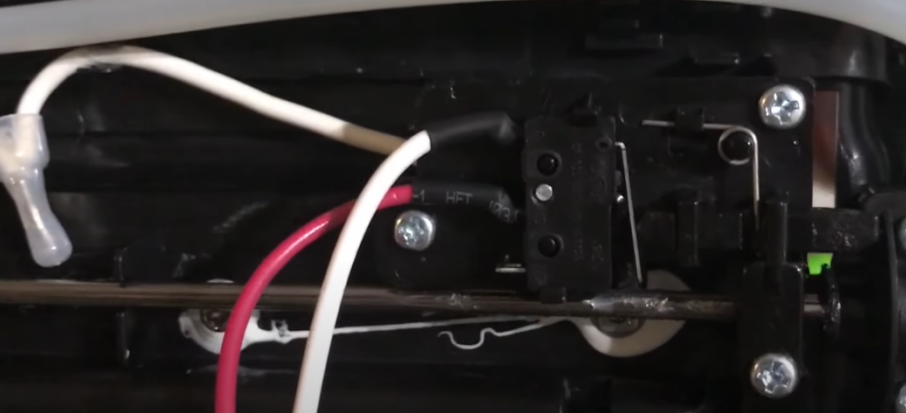
Internal space is limited in most household vacuum sealers. The switch must fit beside the lid, latch, vacuum chamber, wiring and sealing mechanism without interfering with other components.
A miniature micro switch is useful in this environment because it combines compact dimensions with a mechanically defined switching action.
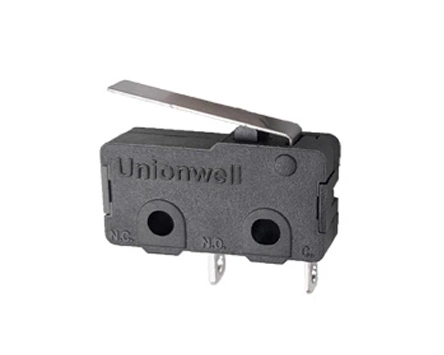
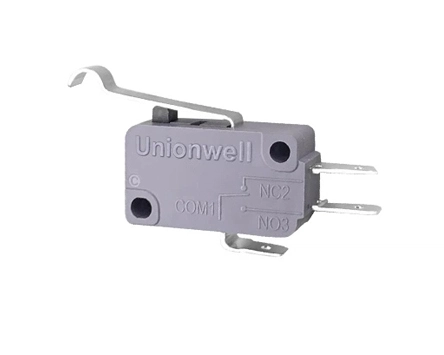
The Unionwell G6 series can be considered for this type of application because the platform supports different actuator and terminal configurations. The final configuration should be selected according to the actual lid movement and installation structure.
Possible actuator options include:
Pin plunger;
Straight lever;
Short lever;
Long lever;
Roller lever.
A pin-plunger version can be suitable when the lid component moves directly toward the switch. A lever actuator may provide greater flexibility when the movement is indirect or the mounting position is offset.
The actuator transfers the movement of the lid or latch to the internal switching mechanism. An unsuitable actuator can cause premature operation, inconsistent detection or excessive closing force.
A lever-type actuator may be preferred when:
The lid does not move directly toward the switch;
The mounting position is not aligned with the contact point;
More mechanical travel is required;
The designer needs to reduce the effective operating force;
Assembly tolerances must be accommodated.
A direct plunger may be more appropriate when the lid component provides accurate linear movement and sufficient travel.
The actuator should not be selected solely from a catalogue image. Engineers need to compare the operating position, release position, pre-travel and overtravel with the movement of the actual lid assembly.
| Selection factor | Vacuum sealer design consideration |
|---|---|
| Switch dimensions | The switch must fit inside the appliance without interfering with the lid or sealing structure |
| Operating force | The lid should operate the switch without requiring excessive closing force |
| Actuator type | The actuator must match the direction and distance of lid movement |
| Operating position | The switch should change state only after the lid is properly closed |
| Release position | The switch should return consistently when the lid is opened |
| Overtravel | The structure should avoid excessive compression after switch operation |
| Contact configuration | The contact form must match the appliance control circuit |
| Electrical rating | The rating must suit the actual signal or load |
| Terminal type | The terminal should match the wiring and assembly method |
| Environmental protection | Protection requirements depend on moisture and residue exposure |
A mini micro switch that has a suitable electrical rating may still perform poorly if its actuator travel does not match the lid mechanism.
Mechanical and electrical requirements should therefore be evaluated together.
It detects whether the lid has reached a defined closed position. Its signal can then enable or begin the vacuum and sealing sequence.
That depends on the pump load and circuit design. In some machines, the switch carries a control signal rather than the full pump current.
The correct actuator depends on the lid movement, mounting position, available travel and required operating force. Pin plungers and lever actuators suit different mechanical structures.
A switch with excessive operating force can make the lid difficult to close or place additional stress on the latch and housing.
Not in every machine. The required sealing level depends on the switch location and the likelihood of exposure to moisture, food residue or other contaminants.
The G6 platform offers a compact structure and multiple actuator and terminal options, making it suitable for evaluation in space-limited home appliance applications.
The lid-detection switch plays an important role in the operating sequence of a home vacuum sealer. It helps the machine confirm that the lid has reached the required position before the vacuum and sealing process begins. Reliable operation depends on matching the switch’s actuator, operating force, travel and electrical configuration to the actual appliance structure. A component should therefore be tested in the complete lid and latch assembly before mass production.
Unionwell provides G6 home appliance micro switch solutions with multiple actuator, terminal and wiring options. Vacuum sealer manufacturers can submit their structural drawings, circuit requirements and purchasing volume to request a suitable switch configuration, engineering sample and project quotation.