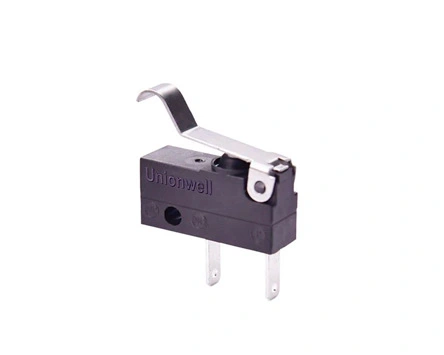
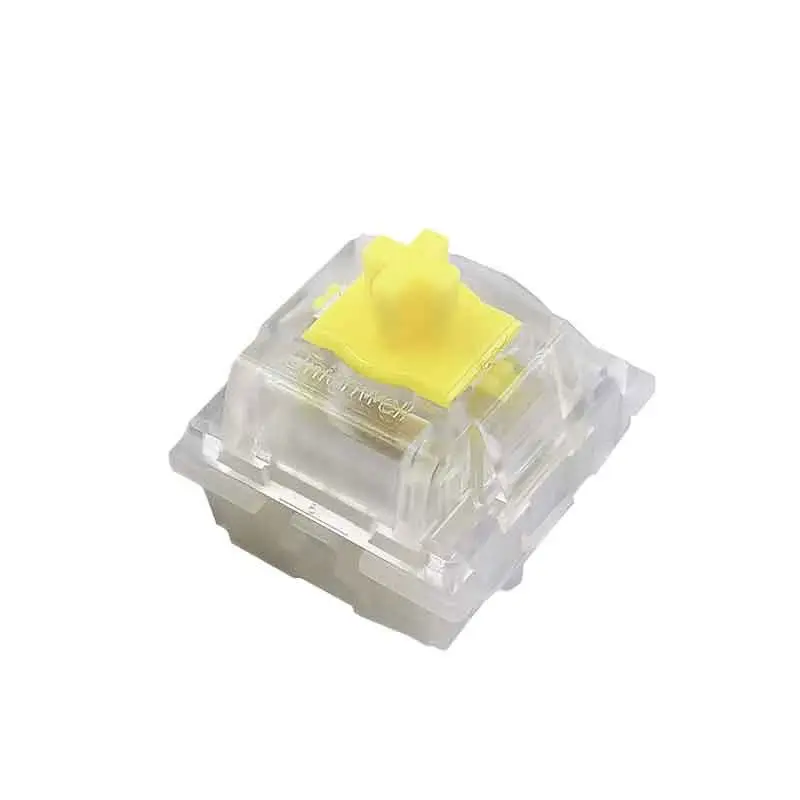
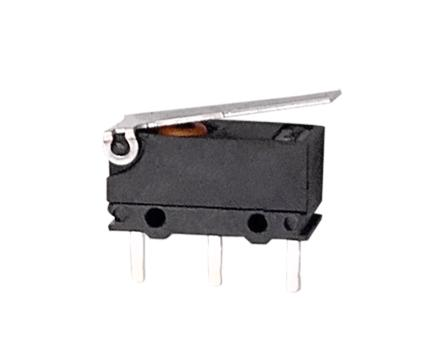
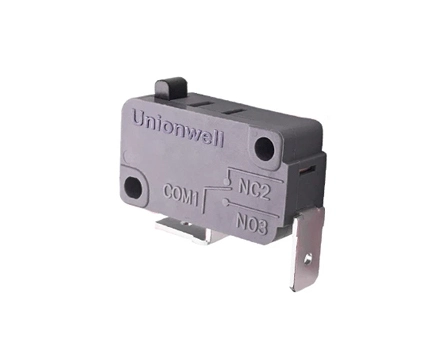
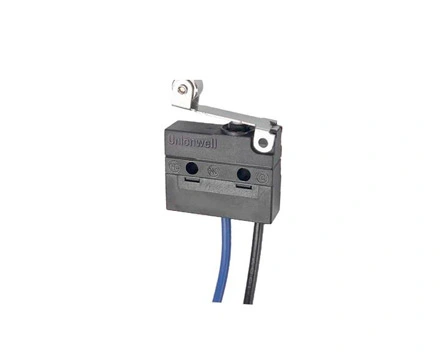
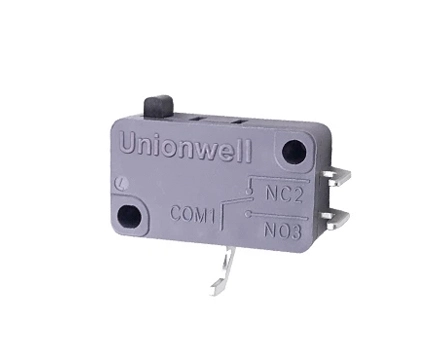
When selecting a micro switch, the first decision is often whether your circuit needs NO (Normally Open) or NC (Normally Closed) behavior. Choosing the right type affects safety, signal logic, reliability, and long-term performance, especially in industrial equipment, home appliances, automotive systems, and control panels. This guide explains the difference between NO and NC micro switches, compares their advantages, and helps you choose the best option for your application.
What Are NO and NC Micro Switches?
Normally Open (NO) Micro Switch: In its resting (unactuated) state, the circuit remains open—no current flows. When the actuator (plunger, lever, or roller) is pressed, the contacts close, completing the circuit and allowing current to flow. NO switches are ideal for "activation on demand" scenarios.
Normally Closed (NC) Micro Switch: In its resting state, the circuit is closed and current flows. When actuated, the contacts open, breaking the circuit. NC switches excel in "fail-safe" and monitoring applications where the default state needs to maintain power or signal continuity.
Both types typically feature three terminals: Common (C), Normally Open (NO), and Normally Closed (NC), allowing flexible wiring configurations in many models.
Key Differences Between NO and NC Micro Switches
Feature
NO Micro Switch
NC Micro Switch
Resting State
Circuit Open (No current)
Circuit Closed (Current flows)
Actuated State
Circuit Closes
Circuit Opens
Primary Use Case
Triggering/Starting actions
Safety/Stopping/Fail-safe monitoring
Fail-Safe Behavior
May not detect wiring failures easily
Detects failures (e.g., wire break stops system)
Energy Consumption (Idle)
Lower (no current in rest)
Higher (current flows in rest)
Common Applications
Door sensors (activation), alarms, starters
Emergency stops, position monitoring, safety interlocks
Mechanical Life
Up to 1–10 million cycles (quality models)
Similar, often 1–10 million cycles
NO vs NC Micro Switch: How to Choose the Right Type
The best way to choose between NO and NC micro switch is to ask one simple question: What should happen in the default state?
If the system should remain inactive until the user presses a button or a machine reaches a position, choose NO. If the system should remain active until a condition is broken, choose NC.
Choose NO Micro Switch When:
You need a start or trigger signal.
The device should only respond when activated.
The application is event-driven.
You want simple ON/OFF logic for user input.
Choose NC Micro Switch When:
Safety is important.
The circuit must detect interruptions.
A failure should be detectable immediately.
The system should run in a closed-loop or protected state.
In many projects, engineers also consider environmental protection, electrical load, actuator type, mounting space, and switching frequency. A good micro switch manufacturer can help match the contact form with the full design requirement.
Comparison Table: NO vs NC in Common Scenarios
Scenario
Recommended Type
Reason
Unionwell Recommendation
Appliance Door Detection
NO
Activates light/alarm only when open
G5 or G303 series
Safety Guard Interlock
NC
Stops machine if guard removed
Sealed waterproof NC models
Emergency Stop Button
NC
Fail-safe: power cuts on failure
High-current NC with roller lever
Position Sensing (Automotive)
Both (SPDT)
Redundancy for critical systems
Custom automotive-grade switches
Battery-Powered Devices
NO
Minimizes idle power consumption
Low-force subminiature NO
Common Application of Micro Switches
Micro switches for sale appear in many industries, but the logic of NO and NC changes based on the purpose of the switch.
NO micro switch examples
Push-button control panels.
Position detection in machines.
Vending machine triggers.
Appliance start functions.
Counting and logic inputs.
NC micro switch examples
Door interlocks.
Emergency stop circuits.
Safety guards.
Alarm systems.
Fault detection loops.
For example, in a safety cover, an NC micro switch can keep the machine enabled only while the cover is properly closed. If the cover opens, the circuit breaks immediately, and the system can stop operation.
Key Factors to Choose the Right Micro Switch
Contact type is only one part of the decision. To choose the right switch, also evaluate the following:
Electrical rating: Make sure the switch supports the voltage and current in your circuit.
Mechanical life: High-quality micro switches may be rated for millions of operations, which matters in frequent-use equipment.
Operating force: The actuator should match the required sensitivity and force curve.
Environmental resistance: Dust, moisture, oil, and temperature can affect performance.
Terminal style: Solder, quick-connect, or PCB terminals may change installation efficiency.
Certifications: Industrial and export projects often require compliance documentation.
If your application is exposed to harsh conditions, choosing a sealed or protected model may be more important than the NO/NC function itself.
FAQ
1. What Does NO Mean in A Micro Switch?
NO means Normally Open. The contacts are open in the default state and close when the switch is activated.
2. What Does NC Mean in a Micro Switch?
NC means Normally Closed. The contacts are closed in the default state and open when the switch is activated.
3. Which Is Safer, NO or NC?
NC is often preferred in safety circuits because it can detect interruptions more easily and supports fail-safe design logic.
4. Can One Micro Switch Have Both NO And NC Contacts?
Yes. Some micro switches provide both contact forms in one unit, which gives designers more flexibility.
Conclusion
Choosing between an NO micro switch and an NC micro switch is not just a wiring decision. It affects how your system starts, stops, protects itself, and responds to faults.
For applications that require activation only when triggered, NO is usually the better choice. For safety, interruption detection, and fail-safe control, NC is often the smarter option. If you are looking for a reliable micro switch manufacturer, Unionwell can support product selection, customization, and application matching for a wide range of industrial and commercial needs.
Factory Address:No. 9 Park Avenue, Longmen County, Huizhou City, Guangdong Province, China
+86-13431874643
We use cookies to offer you a better browsing experience, analyze site traffic and personalize content. By using this site, you agree to our use of cookies.
Visit our cookie policy to learn more.
 English
  français
  Deutsch
  Español
  italiano
  português
  tiếng việt
  Türkçe
  slovenský
  slovenčina
  беларускі
Global_Safety_Approvals_Basic_Micro_Switch_G5.webp "Global Safety Approvals Basic Micro Switch G5")